I am absolutely thrilled to share that our latest research, “Evolutionary plasticity of bacterial surface layer protein exoskeletons," has just been published in Nature Communications!
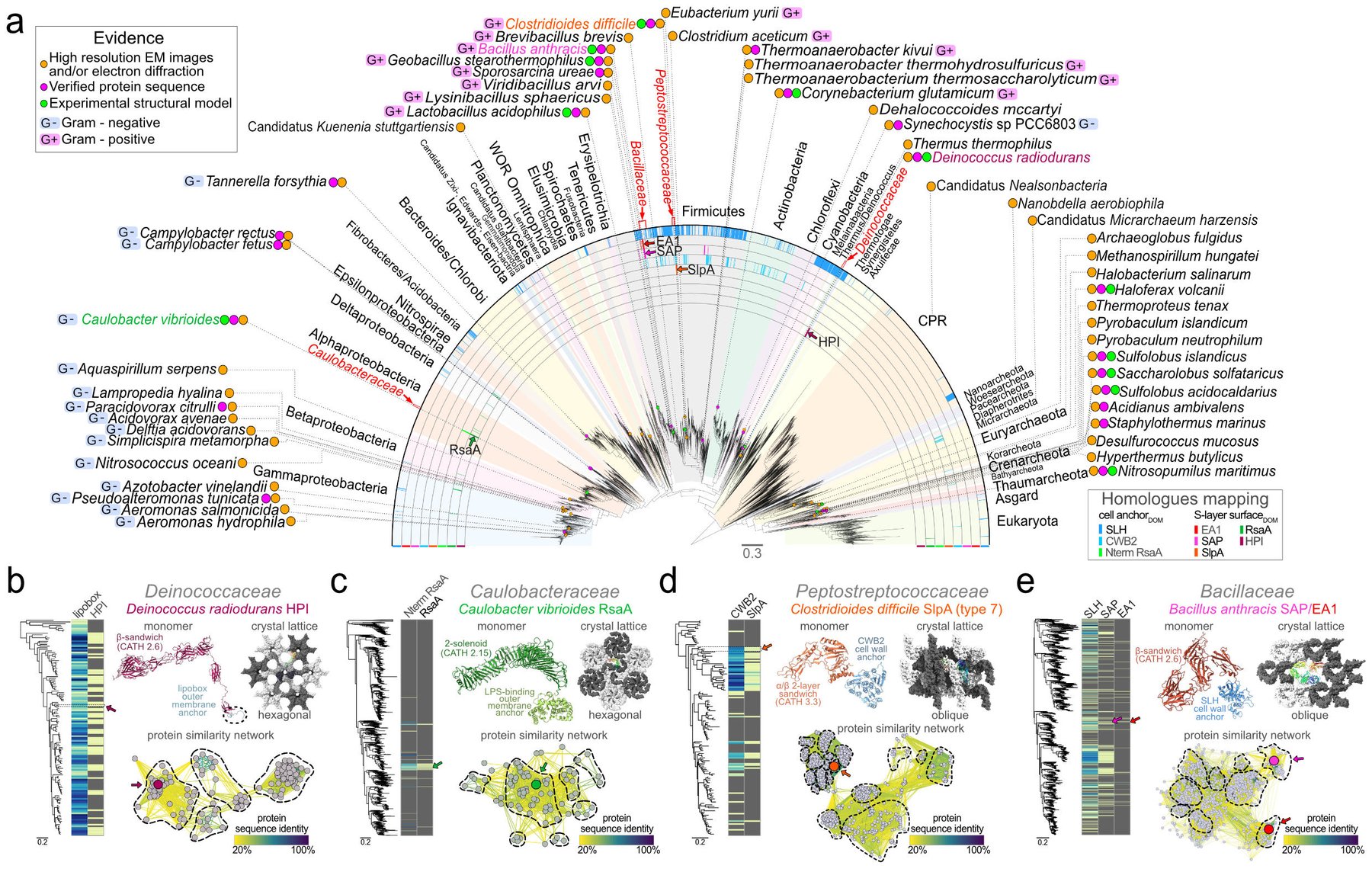
S-layers are environment-exposed, crystal-like protein lattices covering cells of diverse microbes important in human health and disease. They form highly organised molecular exoskeletons separating the bacterial cell from its surroundings. In pathogens such as Clostridioides difficile, these exoskeletons form an interface between the bug and the human immune system. S-layers are a fantastic model for studying how surfaces of microorganisms change and adapt in natural environments, as they are typically encoded by just a single gene.
This surface biodiversity is of particular importance, as variation in biochemical and biophysical properties has been linked to health outcomes ranging from life-threatening diarrhoea and colorectal cancer to health-promoting immunomodulation and infection prevention.
Studying these biomolecular exoskeletons constitutes a major challenge. S-layer protein sequences can display extreme variation among different clinical isolates of the same species, assemble into different lattice symmetries using unrelated protein domains, and be anchored to the cell via different chemical mechanisms. For a bioinformatician they can be the worst nightmare and the most fascinating and addictive puzzle at the same time.
In the lab, their capacity to form ordered, paracrystalline arrays would suggest that they are a perfect and well-behaved model for structural biologists and protein biochemists. And yet, even with the advances in cryo-electron microscopy, experimentally determining 3-D structures of the “least symmetrical” oblique S-layer types remains a major challenge.
In this work, we set out to tackle these obstacles and unravel the mechanism underlying the extreme diversity of S-layers by combining bioinformatics, microbiology, X-ray crystallography, cryo-EM, and molecular cell biology.
We show that, rather than employing rigid and complex architecture which can only evolve slowly over millions of years, biological exoskeletons use flexible modular design which enables extensive modification at short evolutionary timescales.
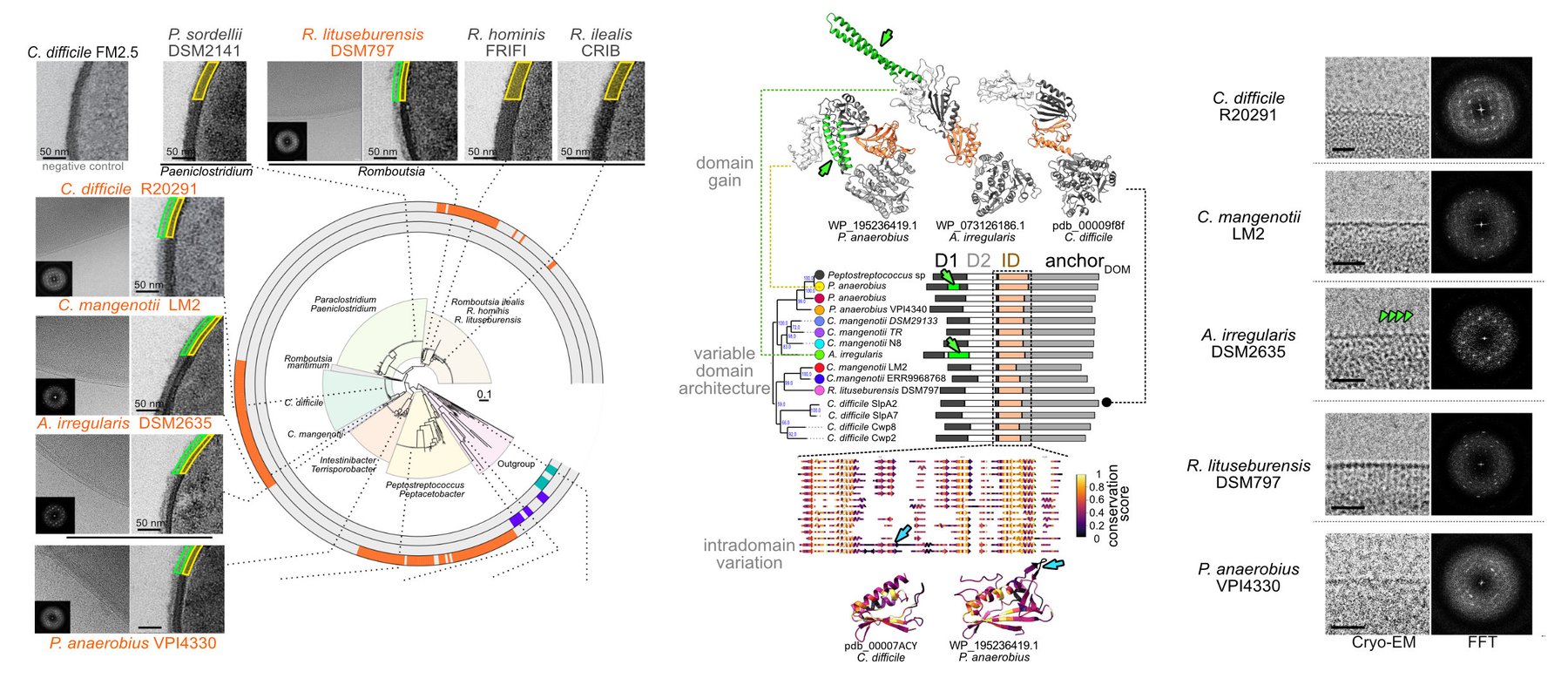
By replacing or modifying just a single gene encoding the S-layer building block, bacteria can reshape their entire cell surface. Swapping anchoring domains enables attaching S-layer proteins to the cell using different chemistry. Adding, removing, or replacing structural elements of various length, from short structural motifs to entire domains, enables reconfiguration of the lattice properties including thickness, pore sizes, and modifying surface epitopes most prone to binding by bacteriophages and antibodies.
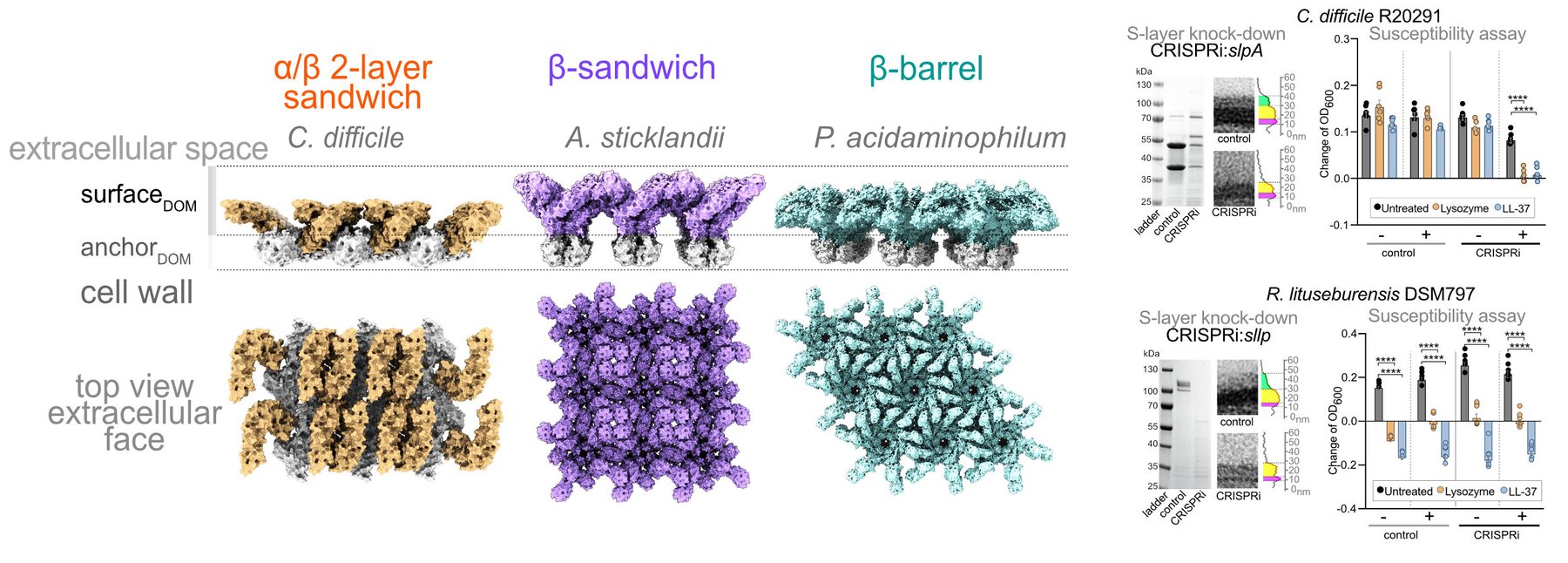
Strikingly, among relatives carrying homologous S-layers, only human gut pathogens (C. difficile and Peptostreptococcus anaerobius) are resistant to human antimicrobials (lysozyme and LL-37). What was perhaps most surprising, the same type of S-layer does not contribute to the protection in environmental bacteria which are not known to infect humans.
Together our findings establish the bacterial S-layer as a paradigm of biomolecular modularity and plasticity, showing how single-protein variation can empower pathogens to evade host immunity.
A huge thank you to my incredible co-authors, Dr Kacper Sendra and Prof Paula Salgado, to our funders (Medical Research Council and Faculty of Medical Sciences, Newcastle University), and amazing facility support at Newcastle and York Universities and Diamond Light Source for making this possible. I am excited to see how this framework will inform future development of therapeutics targeting these dynamic bacterial interfaces!
Read the full paper here: https://www.nature.com/articles/s41467-026-77977-0